


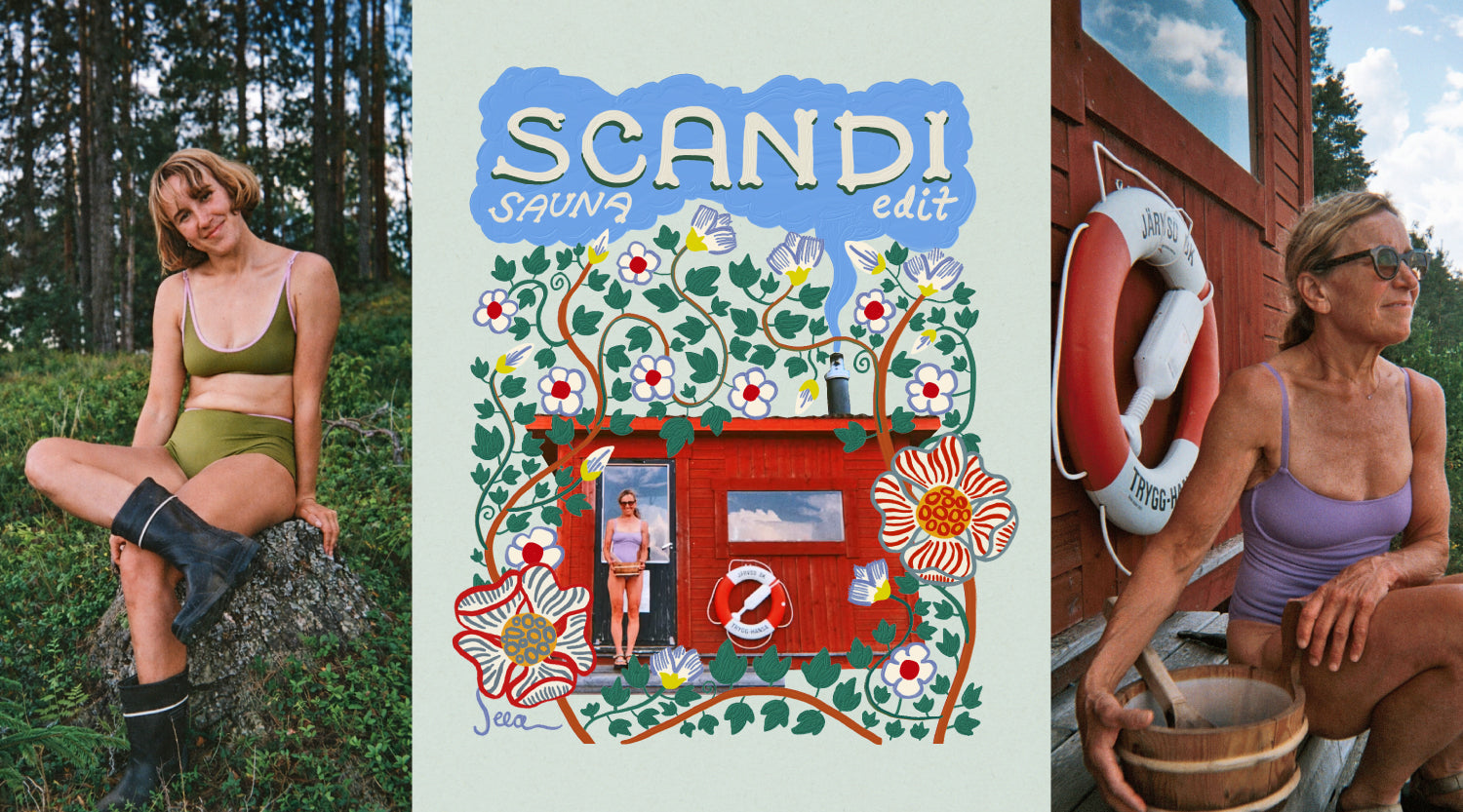
Sauna Culture in Scandinavia
For centuries, Scandinavians have embraced the ancient tradition of communal bathing and saunaing. Throughout Sweden, Norway, and Finland, the practice of saunaing, or "bastu" in Swedish, was originally essential for enduring the harsh northern winters, allowing people to cleanse themselves and find warmth. Over time, it evolved into a multifunctional space for spiritual practices, healing, and even childbirth.
Modern Scandinavian sauna culture retains many of these roots. The "bastu" remains a place for health, a refuge from the harsh winter climate, and a community hub where people gather to relax with family and friends. This emphasis on togetherness and self-care within Scandinavian sauna culture is deeply present in my own Swedish family.
Growing up, I spent my summers in Sweden, swimming in the endless lakes, rivers, and archipelago. While they say surfers seek the Endless Summer, I believe the Swedish people have truly captured the essence of the season: working only when necessary, swimming all day, enjoying good food, and saunaing in the evenings because the sun never sets!
I grew up with a sauna in my house where my family would spend post-dinner digestion time, reading books, and talking about our days. During summers in Sweden, I would sauna at our community's 'bastu’ built by the locals in our little village. Everyone in the community takes pride in the ‘bastu’, keeping it clean and stocked with chopped birch wood. Throughout the week, anyone can book the space with their friends or family and enjoy time together. On Sundays, men and women have separate community sauna times where they come together to sweat, swim, and share village gossip. People arrive as they are, with bodies seen as natural, in all shapes and sizes, creating a welcoming space for individuals of all ages.
 My mom outside our community sauna in Sweden!
In Scandinavia, the sauna is a place for health and relaxation, but it also symbolizes togetherness. It fosters a sense of camaraderie and connection to nature, letting go of individualistic ideals.
As Scandinavian culture gains prominence in today’s zeitgeist, we’ve put together a "bastu" guide for you to explore sauna culture.
The ‘Bastu’ Essentials
‘Bastuung’ (sauna stove) - usually stoked by wood or electricity, covered in sauna stones.
A Towel - you always sit on a towel in the sauna to keep the space clean and avoid the spread of germs.

‘Bastuhink’ (sauna water bucket) - used to hold water that can be poured over the hot stones to create ‘löyly’ or steam.
‘Bastuskopa’ (sauna ladle) - used to pour water over the hot stones.
‘Vasta’ - a bundle of birch leaves, traditionally used in Finland, used to whip the skin, enhancing blood circulation, exfoliating, and releasing the birch leaves' natural oils and aroma.

What You’ll Find in a Sauna
Saunas are typically constructed of wood because it is a poor heat conductor. The wood remains cool to the touch while effectively radiating heat and providing natural resistance to moisture, mold, and insects.
Scandinavian saunas are often located near bodies of water, allowing you to cool off between sessions. If a plunge isn’t possible, take a refreshing shower or, if you’re in a wintry climate, challenge yourself to jump into the snow!

The heart of the sauna experience is the sauna stove or ‘bastuung.’ It is usually wood-fueled (though often electric), creating a ritual of chopping wood, building the fire, and maintaining it throughout the session. This is often a communal practice where people gather to chop wood (often birch) and tend to the fire together. The sauna stones, typically peridotite or basalt, are placed on or around the stove. Once the fire is blazing and the sauna is warm, the stones begin to retain heat. At this point, you can use a ‘bastuhink’ and ‘bastuskopa’ to pour water over the hot rocks, producing steam or ‘löyly’ in Finnish.
Embracing the Heat
My family would sauna multiple times a week in the summer, and my dad would sauna almost every day in the winter. For many, saunaing is a practice and a space for reflection and enjoying simplicity. This simplicity allows people to connect with themselves, be present in their bodies, and breathe. Alone time in the sauna can be very contemplative, providing a moment in the day to pause.
There are numerous health benefits associated with sauna use, including detoxification, improved cardiovascular health, and boosted immunity. However, I believe the most significant benefit is the space itself—a place for contemplation or socializing that fosters a sense of equality and connection.
I think that Scandinavians are onto something with their approach to slowing down and being present in life. If you get the chance, whether in the water or a sauna, take the opportunity to be present in your day and embrace the beauty and simplicity of life. A sauna can help with that too!