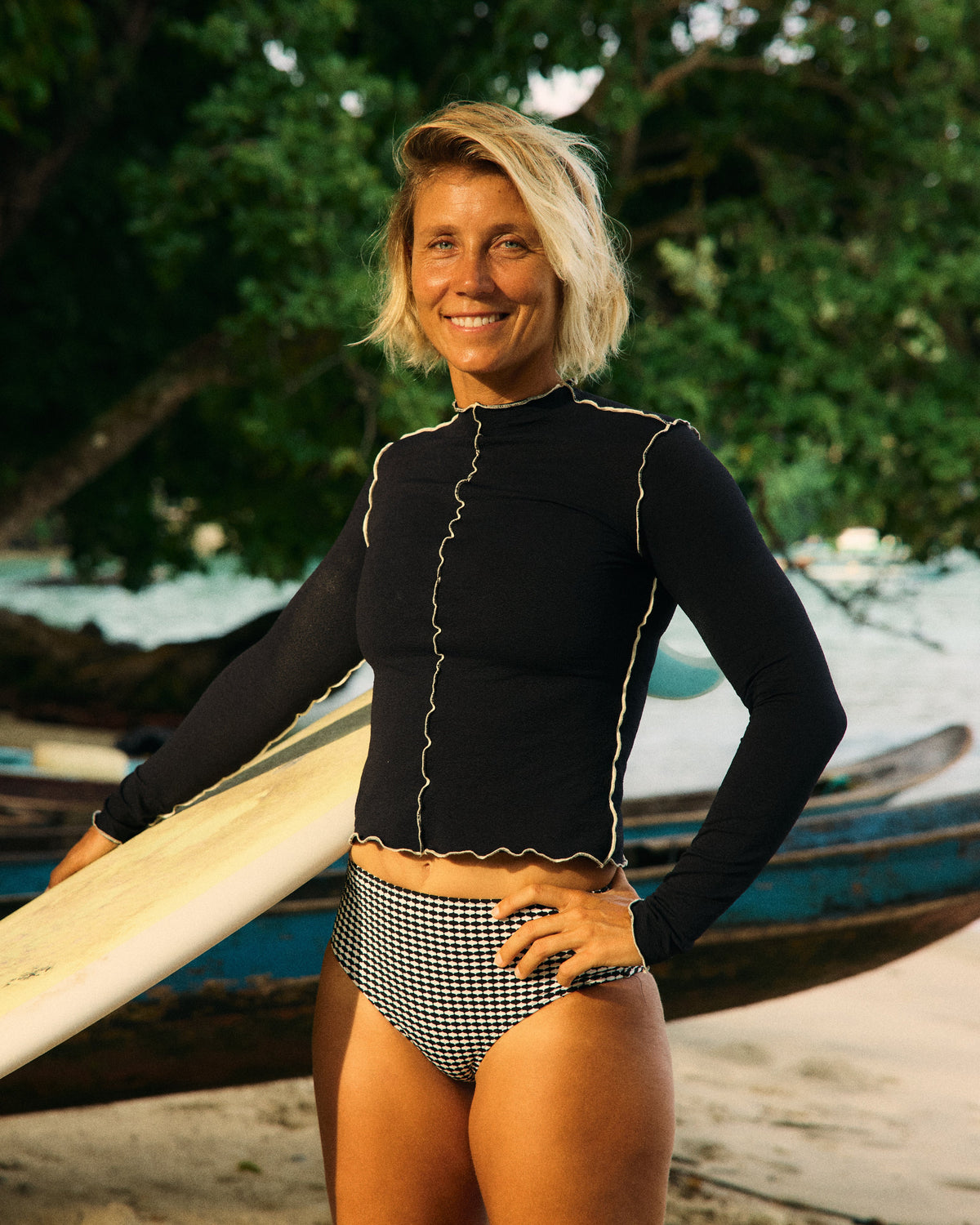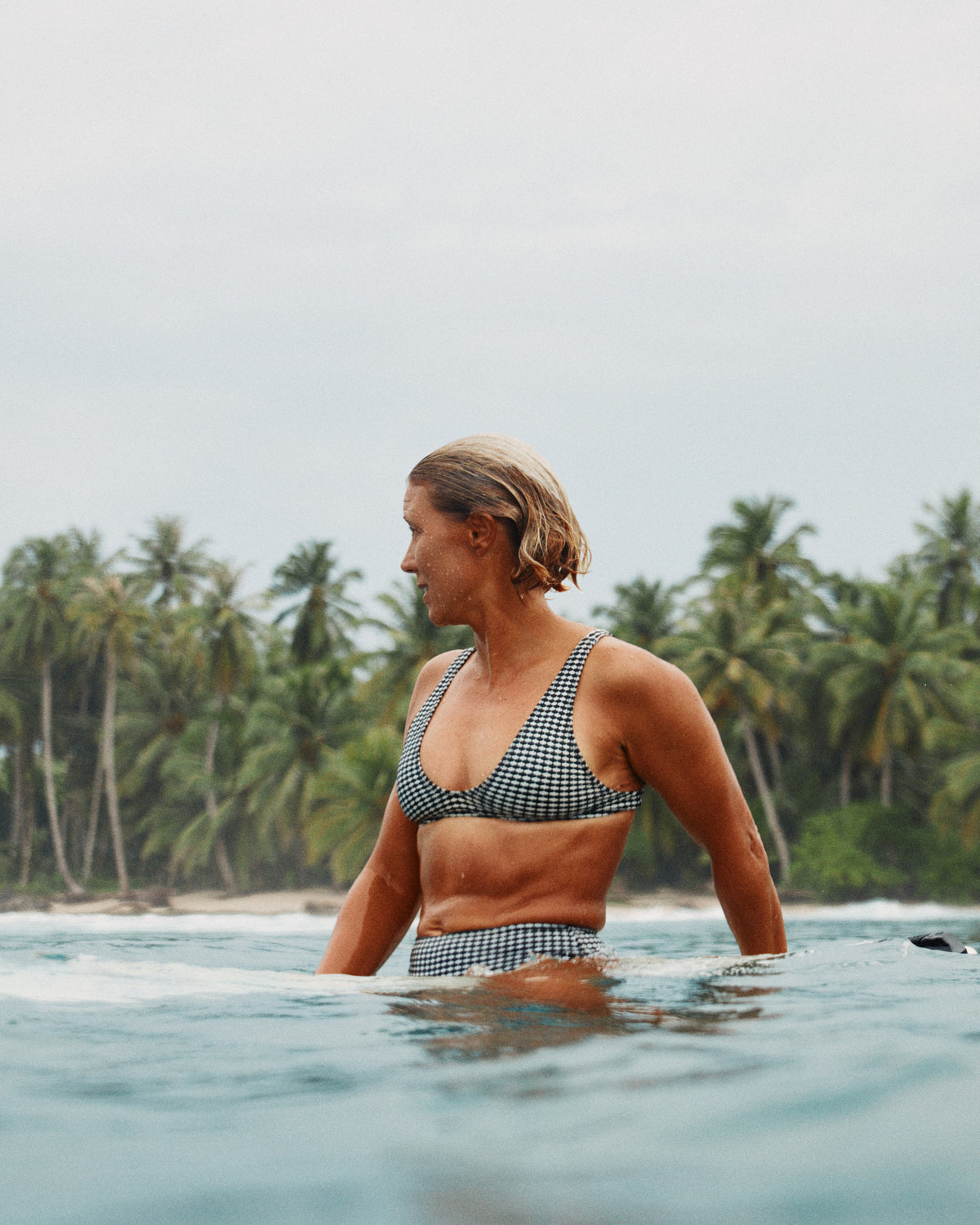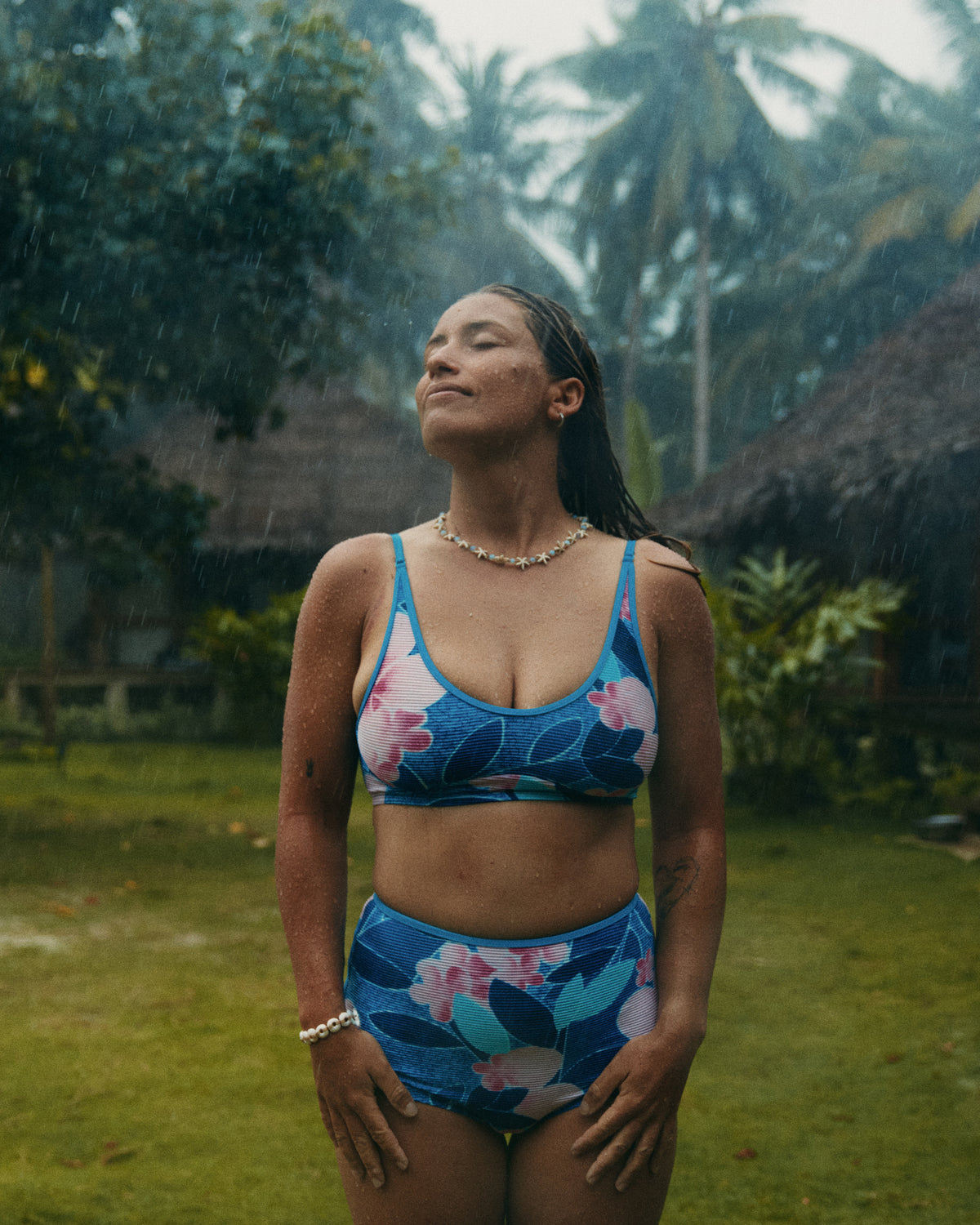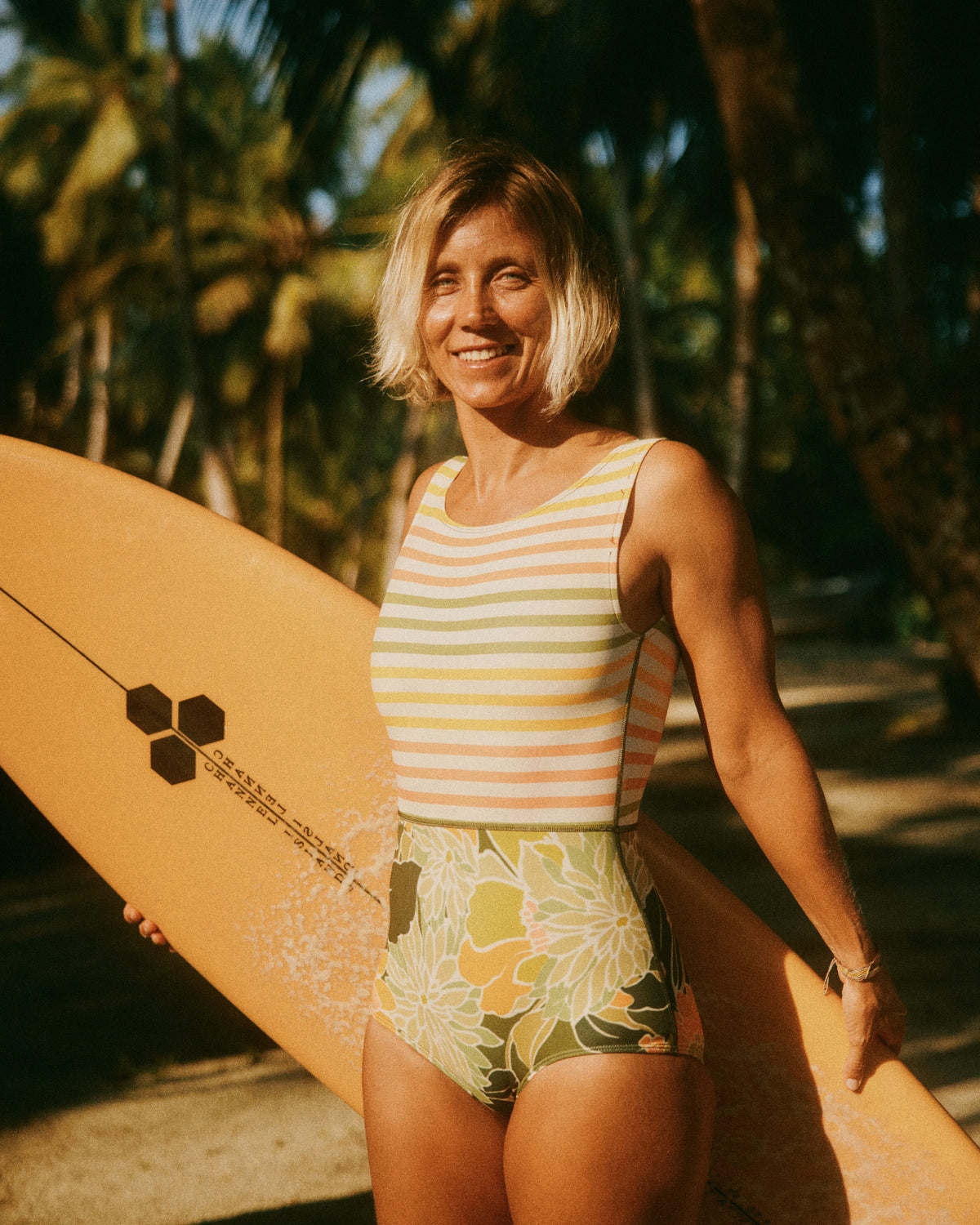

Influenced by her childhood growing up along the beaches of Laguna, CA, Oriana Poindexter developed a deep fascination with both the beauty and biology of the ocean. She turned to photography as a way to better understand the world around her, discovering that scientific exploration can also be expressed through art. Rather than choosing a single path, she has seamlessly woven together photography and marine conservation—building an impressive body of work marked by numerous accolades and accomplishments.
Oriana has a M.A.S. in Marine Biodiversity & Conservation from the Scripps Institution of Oceanography, and a B.A. in Visual Arts from Princeton University. Her work has been published by Smithsonian Magazine, The New York Times, and The Wall Street Journal, and exhibited at Laguna Art Museum, Oceanside Museum of Art, and Center for Fine Art Photography, among others.
Seea sat down with Oriana to learn more about her recent exhibit, The Blue Forest, showing at Catalina Museum for Art & History. The Blue Forest features life-size cyanotype images of native marine flora, collected by Oriana while freediving just off Catalina’s shoreline and contact printed onto flowing silk panels.
Oriana speaks about the ocean with both beauty and authenticity. It was a joy to get to know her and learn about her sense of wonder, responsibility, and deep connection to the water and marine life. She reminds us that whatever you’re passionate about—whether it’s surfing, freediving, art, or the ocean—you can find a way to weave those interests together into something meaningful.
Photos by Heidi Zumbrun

1. Where did you grow up, and how did that early environment shape your relationship to the ocean? Was the ocean part of your everyday life, or something you had to seek out?
I grew up in Laguna Beach, California, and some of my earliest memories are of water, tidepools, and spending time at the beach with my family. I was lucky to have parents who loved spending time at the beach, and made the effort to take my sister and I down to the beautiful coves of Laguna as much as they could. I was also a competitive swimmer growing up, which gave me a strong foundation and confidence in the water that made it relatively easy for me to transition to surfing and diving as an adult.
2. Do you remember a defining moment when you realized the ocean would be central to your life?
I can’t pinpoint one specific moment, but I know that since my later years of high school, I was trying to figure out how to spend as much of my time at the beach, and in the ocean, as possible. I didn’t have any adults in my life growing up that worked around the ocean though, so I didn’t have much of an idea of how I could make that a reality until I moved to San Diego and started working with the Scripps Institution of Oceanography.
3. Many people feel pressure to choose between science and art, yet you pursued both — earning a degree in Marine Biodiversity & Conservation from the Scripps Institution of Oceanography and a B.A. in Visual Arts from Princeton University. What allowed you to follow both paths? How do they inform one another in your work today?
I had started out in undergrad studying pre-med, and then ecology & evolutionary biology, so I was always interested in the sciences. Once I connected with photography, I felt really powerfully drawn towards it as a tool with which to understand the world around me, and I was lucky to study with a really impactful teacher and legendary fine art photographer, Emmett Gowin, who used his work in photography to interpret both his own personal life experiences and environmental change.
I landed at Scripps Institution of Oceanography in San Diego a few years after finishing my undergrad at Princeton and moving back to Southern California, initially because I was interested in photographing their extensive marine collections. Very quickly, I realized that I was just barely seeing the tip of the iceberg when it came to learning about the ocean, so I applied to graduate school to begin to deepen my understanding.
Today, they both combine to be the foundation of everything I do. I aim to use the tools of photography to communicate my experiences in the ocean, and to share that with others.

4. Is there a marine issue you feel especially invested in right now — something you wish more people understood?
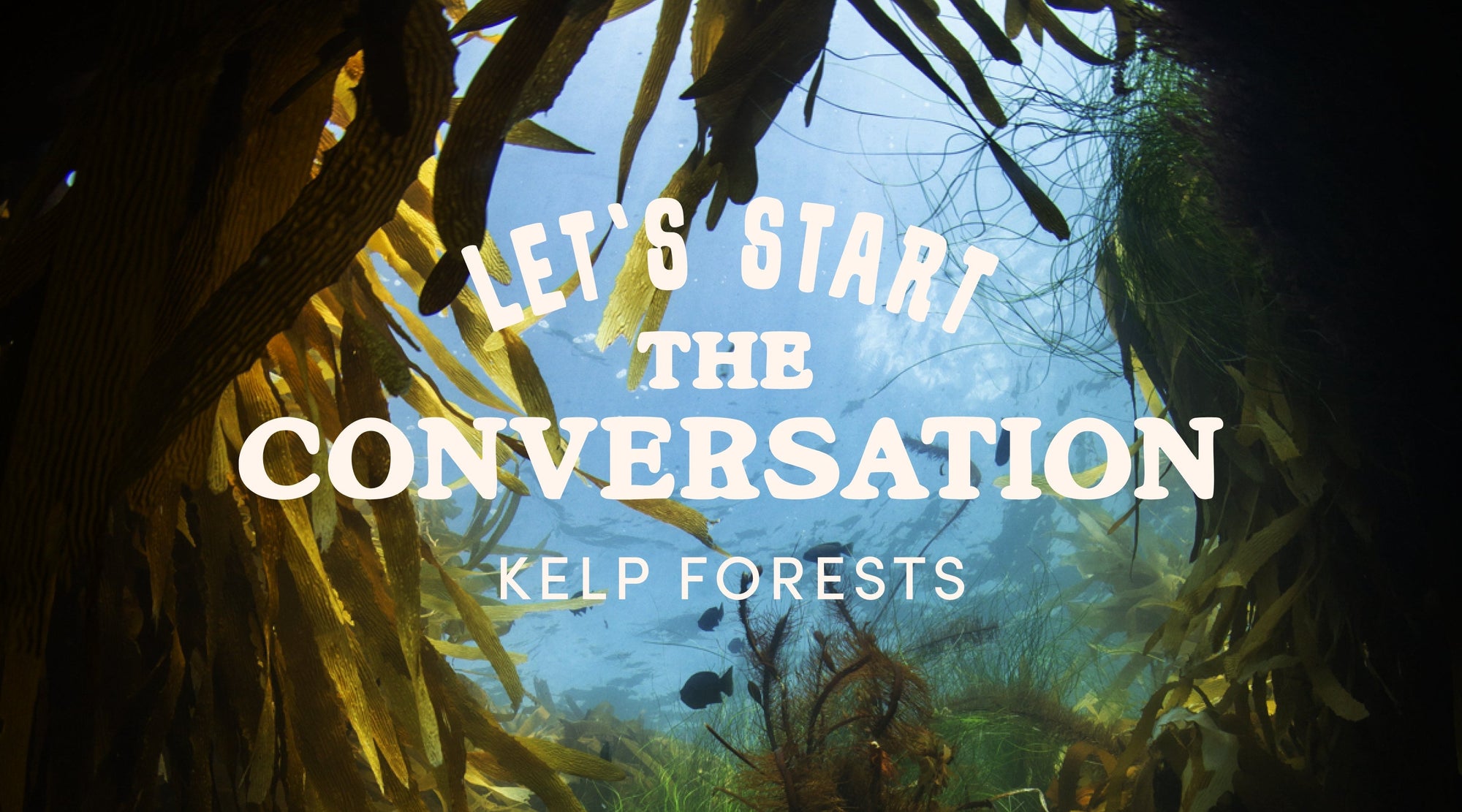
I’m particularly interested in the health and resilience of kelp forests along the Pacific coast. These ecosystems are rich and productive, supporting countless species, but they’re very sensitive to the global-scale changes that result in warming waters, intense storm events, and the trickle-down changes that result in altered predator-prey dynamics. I think consistent monitoring and long-term observation are critical for understanding how these forests respond to environmental pressures, and how they cycle over time.
5. How did you begin working with cyanotypes? What draws you to the medium?
I studied the history of photography and black & white darkroom printing as an undergrad. In studying these things, you learn about the basic fundamentals of chemical photography - how light, shadow, and chemical reactions combine to create photographic images. I became interested in photograms early on - images that are made by placing objects directly in contact with light-sensitive photographic paper and exposing them to light, ultimately creating a life-size record of the shadow of the object.
Cyanotype was developed in 1842 as one of the earliest forms of photography, and it creates distinctive images in Prussian blue and white. One of the first people to take up the medium was a botanist named Anna Atkins, who was creating cyanotype photograms of the seaweeds she collected on the British coastline, and published the world’s first book of photographs.
Once I started freediving in the giant kelp forests off of San Diego with a camera in 2014 and 2015, I became frustrated that the film photographs I was making were not successfully communicating both the incredible scale and the super fine details of the giant kelp. I started using the cyanotype process in 2018 as a way to capture both the scale and the detail of the kelp and other seaweeds, and it’s been really a great fit for a bunch of different reasons.
More recently, I’ve started to experiment with a broader range of historic and experimental photographic processes to expand the color palette, tonal range, and quality of the work I create, introducing colors like golds, browns, and pinks. Even with these different processes, what I find myself being drawn to is still the basic building blocks of photography and chemical image making - sunlight, water, and time - and how I can apply them to expand our understanding of the underwater world.

6. What does your creative practice look like day to day — in the studio and in the field?
It’s all over the place! The best days are the ones that I get in the water and create artwork, but I’ve been running a small independent studio / consulting business since 2021, so there are many days spent at the computer doing administrative work, submitting applications (and getting rejections!), project management, emails, emails, emails, etc.
The next project I’m working on is a year-long experimental project supported by the City of Laguna Beach that will culminate in an exhibit in early 2027. I am still in the experimental phase of this project as I write this in February 2026, so it’s a combination of research, field trials, and back-to-the-drawing board at the moment as I figure out a way to create handmade photogram images without removing any specimens from the Marine Protected Area waters of Laguna Beach. Stay tuned as this work develops, I’ll be hosting a few open-to-the-public community engagement events throughout the course of the project, and would love to have some Seea sisters participate!
7. You currently have work on view at the Catalina Museum of Art & History. What inspired this body of work, and how did place shape it?
The Blue Forest is an immersive exhibit that I created entirely on the island of Catalina in response to the experiences I’ve had freediving there. I first visited Catalina as a sixth grader for an overnight camp, and then began a tradition of camping there each summer as an adult - this will be my 15th year of what has grown to be called ‘kelp camp’!
For the show, I spent some time in Avalon to create a small forest of cyanotype-printed silk panels, each about 12 feet in length, that depict the kelp species native to Catalina Island - giant kelp, elk kelp, feather boa kelp and more. They hang from floor to ceiling in a circular, chapel-like gallery, and are surrounded by a school of 900 hand-printed cyanotypes of sardines.

The sardines create an enveloping swirl of fish around the kelp forest, which is an attempt to recreate the magical experiences I’ve had while freediving with large schools of sardine, anchovy, and mackerel in the kelp forests of Catalina. Lastly, I collaborated with my dad to create a soundscape for the exhibit with underwater recordings I made last year while camping and diving in the kelp forest of Little Harbor, Catalina, combined with his acoustic guitar melodies that formed the soundtrack to my childhood.
The exhibit at the Catalina Museum of Art & History in Avalon is on display until October 2026, and it really needs to be experienced in person! Make it your excuse for a day trip out to the island 🙂

8. How do diving and surfing influence your relationship to the ocean — and your artistic practice? Do those moments in the water feel like research, meditation, inspiration, or something else entirely?
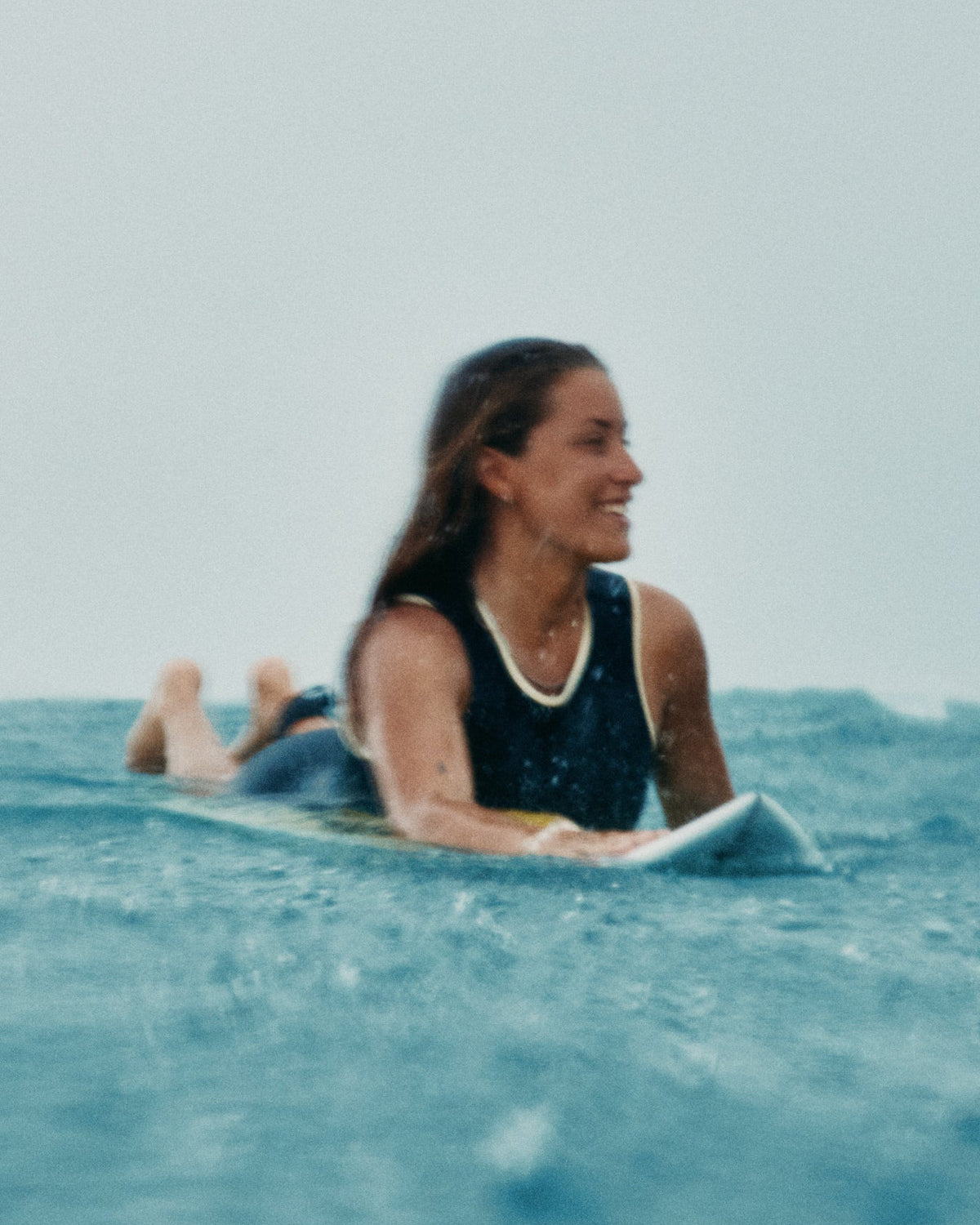
Every time I have an opportunity to get in the ocean, it’s a combination of research and inspiration, absolutely. I surf, free dive, scuba dive, and swim every chance I get, and the ocean conditions really govern the choice of activity (and realistically, the amount of time I have). I’ve never understood why so many surfers complain about flat spells instead of just going snorkeling!
Free diving is my favorite thing to do. It’s the closest I get to feeling like I’m part of the fabric of the environment, and you learn something new every time you go - whether you learn something about yourself, about the ocean, or both.
Surfing feels more like play than anything else, but it’s always an opportunity to observe the ocean and the creatures in it. Sometimes the ocean will deliver a cool or unusual piece of seaweed to me while I’m surfing, and I’ll have to get out and run home in order to make a print with it!
I’ve recently learned to love swimming again after a rocky relationship with competitive (pool) swimming throughout my teens. Ocean swimming on a clear day is like going for the most beautiful walk in the world, and has become the place where I’m able to think through difficult things in my life most effectively.
9. As surfers and ocean lovers, how can we become better stewards of the sea in meaningful, everyday ways?
I believe that each person can develop their own personal relationship with the ocean, or with whatever nature is available in their life. By observing your environment on a daily basis, you will become attuned to the factors that impact it, and the actions that you can take to lighten your personal impact on it will become apparent.
I like to reference what marine biologist and activist Ayana Elizabeth Johnson terms the ‘Climate Action Venn Diagram’ - a method to identify your particular role to play, based on your strengths, your interests, and the needs of your community.

10. What do you hope people carry with them after experiencing your work?
One of the most inspiring feelings I experience when I’m in the ocean is the sense of feeling small. Not in a diminishing way, but a humbling one that reminds me I am part of something far larger than myself, and therefore responsible for how I move within it. I hope for people to develop a personal connection with the environment around them, grounded in curiosity, attention, and care.
In popular culture today, especially in Southern California, I feel the ocean is seen as a weird mix of playground and museum - a place for recreation or distant observation, but little else. I think those viewpoints can make people feel that respect means separation. In reality, our relationship with nature is much more complex, and reducing it to simple binaries - take or no-take, work versus play - is really limiting.
I’m also interested in how visual art can translate scientific research into something widely felt and understood, helping to bridge gaps in knowledge. If the work creates space for wonder, responsibility, and connection to exist side by side, then it’s doing everything I could possibly hope for.
11. When you think about the future of our oceans and our relationship to them, what gives you hope?
What stands out to me is the number of people doing steady, practical work on behalf of the ocean - in research, policy, education, and conservation. Progress isn’t linear, but it adds up.
I’m a realist. The ocean is immensely powerful. It will outlast us and continue to evolve. That means it most likely won’t be the same ocean we remember. That doesn’t mean it’s ‘dead’, it just means the future ocean will be different. The ocean will adapt - whether we do is up to us.

Thank you to Oriana for being such a soulful steward, showing us what it means to be faceted, and pushing us to find a wonder and respect for the ocean.
Check out MORE of her work!